Sewage backup cleanup guide
Sewage Backup Cleanup: What to Do First and When to Get Help
Sewage backup cleanup starts with safety, avoiding contact with contaminated water, keeping children and pets away, documenting the damage if safe, stopping the source when possible, and getting qualified help for cleanup, drying, and disposal.
Short answer
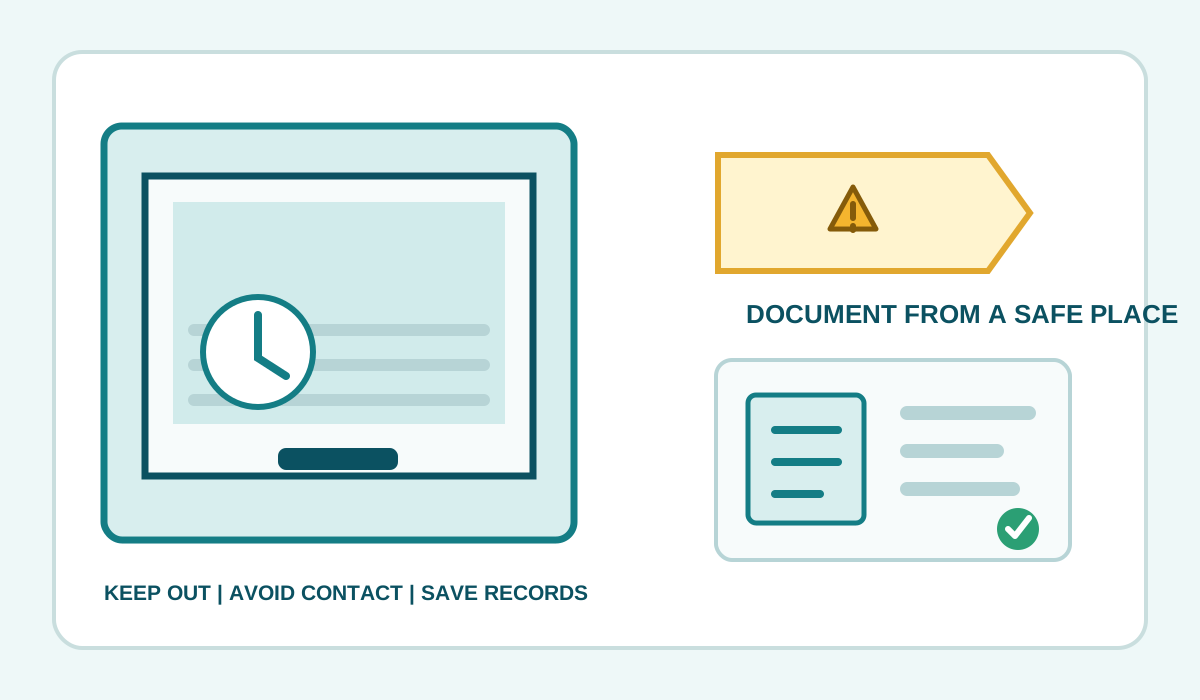
Sewage backup is commonly treated as category 3 water and can contain harmful contaminants. Keep people and pets away, avoid walking through the area, stop using affected plumbing if possible, document the damage from a safe place, and contact qualified cleanup help for anything beyond very limited, contained exposure.
Safety first
If there is standing water near electricity, a sagging ceiling, sewage, fuel, structural damage, or any situation that feels unsafe, leave the area and contact emergency services, your utility provider, a plumber, or qualified local cleanup help as appropriate. Do not enter contaminated or electrically unsafe areas to take photos.
Important
Water Mitigation Hub is an informational homeowner resource, not a restoration company. We do not inspect homes, dispatch crews, guarantee emergency availability, or verify every local contractor. Use this guide to understand your options, document damage, and compare local help before signing work authorizations.
What this page is, and is not
Updated July 23, 2026
What should you do first after a sewage backup?
After a sewage backup, stay out of the affected area, keep children and pets away, and avoid contact with the water or wet materials. Stop household water use when drains or toilets are backing up, do not use household fans, and stay away from electrical equipment. Sewage backup is usually treated as category 3 water because it may contain contaminants. If it is safe, document the damage from a distance before cleanup starts, then contact qualified plumbing and contaminated-water cleanup help. Coverage is not guaranteed.
What to Do First After a Sewage Backup
This numbered list is general education, not a deterministic cleanup procedure. Skip any step that would require entering an unsafe area, contacting wastewater, or approaching electrical, gas, structural, or utility hazards.
- 1Keep people and pets out of the affected area
- 2Avoid all contact with wastewater and wet materials
- 3Stop using toilets, sinks, showers, and appliances connected to the affected drain system
- 4Stay away from electrical equipment and utility areas
- 5Identify the likely backup location from a safe distance
- 6Photograph the affected area only when it is safe
- 7Contact a plumber, sewer, or septic professional for the source
- 8Contact qualified contaminated-water cleanup help
- 9Notify the insurer when damage may be significant
- 10Document affected rooms, materials, contents, and the visible water level
- 11Save scopes, readings, drying logs, disposal records, estimates, and receipts
- 12Plan restoration only after contamination and moisture conditions are addressed
Key points
- Do not walk through sewage water or touch wet materials with bare skin.
- Keep children, pets, and health-sensitive people out of the affected area.
- Avoid running household fans because they can spread contamination.
- Porous materials such as carpet, pad, drywall, and insulation may need removal.
- Cleanup usually needs PPE, containment, extraction, drying, and documentation.
- Insurance may review documentation, but coverage is not guaranteed.
When Not to Enter a Sewage Backup Area
Sewage backup brings contaminated water into the home and can put wastewater near electrical components, finished materials, and stored contents. If any of the items below apply, leave the area and treat the loss as an emergency water mitigation situation. For what a fast response visit usually includes, see emergency water mitigation service. The disclaimer covers the limits of this guide.
Do not enter, walk through, touch, pump, vacuum, or disturb sewage-contaminated water or materials when electrical, structural, gas, chemical, or contamination hazards may exist. Contact emergency services, the utility provider, a plumber, a septic professional, or qualified cleanup help as appropriate.
| Condition | Why it may be dangerous | Safer next step |
|---|---|---|
| Visible sewage or wastewater | Contamination and slip or exposure hazards may be present | Leave the area and get qualified guidance. |
| Toilet overflow containing waste | Wastewater may contaminate flooring and nearby materials | Keep people and pets out; stop related water use. |
| Basement floor-drain backup | The source may be a building sewer or municipal system | Do not enter to pump or inspect; document from safety. |
| Water near outlets, wiring, appliances, or panels | Electrical shock or fire risk may exist | Do not touch controls or cross the water. |
| Outdoor floodwater mixed with sewage | Fuel, chemicals, debris, and sewage may overlap | Follow official instructions and avoid contact. |
| Gas, fuel, chemical, or solvent odor | Fire, inhalation, or chemical exposure may exist | Leave and contact appropriate emergency or utility help. |
| Rapidly rising wastewater | Conditions and contamination can change quickly | Leave and seek qualified emergency help where appropriate. |
| Sagging ceiling or unstable flooring | The structure may not support entry | Stay out and request a safety evaluation. |
| Submerged appliances or HVAC equipment | Restarting or touching equipment may be unsafe | Do not operate, unplug, move, or test it. |
| Children, pets, older adults, pregnant occupants, or health-sensitive people nearby | Exposure risk may be higher | Keep them away and seek appropriate guidance. |
| Widespread wet carpet, drywall, insulation, or contents | Porous materials may hold contamination and hidden moisture | Avoid disturbance and arrange qualified evaluation. |
| Fire-related sewage or wastewater damage | Utilities and building conditions may be compromised | Follow emergency instructions and avoid entry. |
Sewage Backup Cleanup Steps
The steps below focus on safety, documentation, and ordered action. Skip any step that puts you at risk and move directly to calling a qualified company or emergency services.
Stay out of the affected area
Treat any room with visible sewage, sewer odor, or contaminated standing water as unsafe to enter until the area is contained and properly handled.
Keep children and pets away
Block doorways with a closed door if possible. Older adults, infants, pregnant women, and anyone with health sensitivities should stay out of the area entirely.
Avoid contact with wastewater and wet materials
Do not touch contaminated water, wet carpet, wet drywall, or wet contents. Avoid handling contaminated items yourself. A qualified cleanup company should explain what can be cleaned, what should be removed, and what protective steps are required.
Stop water use if a drain or toilet is backing up
Avoid flushing toilets, running sinks, taking showers, or running the dishwasher and washing machine until the cause is identified by a plumber.
Stay away from electrical equipment and utility areas
Do not approach panels, outlets, wiring, appliances, fixtures, or utility equipment near wastewater. Do not cross contaminated water or touch electrical controls. Contact appropriate qualified help when electrical exposure may be involved.
Photograph damage from a safe distance if possible
If it is safe, take wide and close-up photos and a short video of the source area, the water path, the depth, and any affected rooms or contents before cleanup starts.
Contact your insurer when damage looks significant
Ask whether sewer backup is covered under your policy or a separate endorsement, what your deductible is, and whether emergency mitigation may begin before an adjuster visits.
Contact a qualified company that handles category 3 water
Sewage backup is typically treated as category 3 water. Cleanup usually needs personal protective equipment, containment, extraction, controlled removal of porous materials, antimicrobial cleaning where appropriate, and drying.
Save receipts and keep notes
Track who you called, when they arrived, what was removed, where waste was disposed, and any temporary repairs. Save plumber invoices, mitigation estimates, and disposal manifests.
Keep cleanup, mitigation, and restoration scopes separate
Sewage cleanup and drying are usually a mitigation scope. Replacing drywall, flooring, baseboards, or cabinets is usually a separate restoration scope with its own pricing.
Sewage Backup Cleanup by Situation
The table below pairs common sewage backup situations with a first safe step, why each situation matters, and a sense of when cleanup should move to a professional.
| Situation | First safe step | Why it matters | When to call a professional |
|---|---|---|---|
| Toilet overflow with waste | Close the toilet supply valve and keep people out of the bathroom. | Toilet overflow with waste is typically treated as category 3 water. | Call when waste reached flooring, baseboards, or an adjoining room. |
| Basement sewer backup | Stay out of the basement and stop water use upstairs. | Below-grade rooms can collect wastewater that soaks porous materials fast. | Always call for a basement sewer backup affecting finished space. |
| Sewage backup after heavy rain | Avoid the area and document what you see from the doorway. | Combined sewers can back up during storms and bring outdoor contamination inside. | Call when wastewater entered the home through drains or floor openings. |
| Floor drain backup | Keep people away and avoid running water that drains into the same line. | Floor drain backups often signal a main line issue and may recur. | Call when wastewater reached flooring, walls, or stored contents. |
| Septic system backup | Stop water use, keep people out, and avoid the leach field outdoors. | Septic backups can affect both indoor space and outdoor soil safety. | Call a septic professional for the system and a cleanup company for the home. |
| Sewage water on carpet | Do not vacuum, walk on, or attempt to dry the carpet in place. | Carpet and pad are porous and usually cannot be saved after sewage contact. | Always call for sewage on carpet so removal and disposal can be planned. |
| Sewage water on drywall | Avoid touching the drywall and keep airflow away from the area. | Drywall and insulation absorb contamination and can hold moisture in cavities. | Call for any sewage contact with drywall, baseboards, or insulation. |
| Sewage backup near appliances | Stay away from the appliances and utility area. | Washing machines, water heaters, and HVAC units can spread contamination. | Call before using any appliance that contacted wastewater. |
| Multiple rooms affected | Close interior doors to slow the spread and keep people in unaffected areas. | Multi-room sewage events usually involve shared walls and hidden cavities. | Always call for inspection, containment, and a written scope. |
| Sewage mixed with outdoor floodwater | Treat all of it as contaminated and avoid contact entirely. | Floodwater can carry sewage, fuel, chemicals, and biological hazards. | Always call a qualified company and follow public safety guidance. |
Common Sewage Backup Sources
A single clue does not prove the source. A plumber, sewer contractor, septic professional, utility provider, or other qualified professional may be needed to confirm what happened.
| Possible source | Common clue | Who may need to evaluate it | What to document |
|---|---|---|---|
| Blocked building sewer line | Multiple fixtures back up or drain slowly | Plumber or sewer professional | Fixtures, floor drains, timing, and water level |
| Municipal sewer backup | Backup follows a neighborhood or street event | Utility provider and qualified cleanup help | Notices, weather, source clues, and affected rooms |
| Floor drain backup | Wastewater rises through a basement drain | Plumber or sewer professional | Drain location, depth, and household water use |
| Toilet overflow with waste | Waste and wastewater leave the bowl or toilet base | Plumber and qualified cleanup help | Toilet, floor, baseboards, and adjacent rooms |
| Septic tank or system backup | Indoor backup may coincide with slow drains or outdoor concerns | Septic professional and cleanup help | System clues, outdoor conditions, and indoor damage |
| Tree-root intrusion | Recurring or localized sewer backups may occur | Sewer professional | Recurring dates, drain locations, and reports |
| Collapsed or damaged sewer line | Persistent backup or abnormal drainage may occur | Plumber or sewer professional | Camera or repair report if available |
| Grease or debris blockage | Kitchen fixtures or a branch line may back up | Plumber | Affected fixtures, timing, and repair notes |
| Heavy rainfall affecting a combined sewer | Outdoor water may enter through drains | Utility provider and qualified professionals | Rain timing, flood line, and contamination concerns |
| Failed sewage ejector pump | Below-grade fixtures may overflow | Plumber or pump professional | Pump area, alarms, water level, and source notes |
| Cross-connection or plumbing problem | Unexpected wastewater may appear at a fixture or drain | Qualified plumbing professional | Visible source clues and household water use |
| Unknown backup source | Different sources can look similar at first | Qualified professional evaluation | Do not classify from one clue alone |
Sewage Backup vs Other Water Sources
Sewage, sewer backups, septic backups, and many outdoor floodwater situations are generally treated as highly contaminated. Water conditions can worsen with time and contact with building materials. Unknown water should be approached cautiously until enough facts are available.
| Water source | Possible contamination concern | Homeowner handling | Related guide |
|---|---|---|---|
| Clean supply-line water | Usually lower contamination concern if identified quickly | Avoid electrical and structural hazards; document and ask qualified help | /burst-pipe-water-damage/ |
| Appliance supply-line water | Depends on source and time in contact with materials | Stop the source when safe and document the appliance | /appliance-overflow-water-damage/ |
| Appliance discharge water | May contain detergent, food residue, or waste | Keep people away and avoid treating it like clean water | /appliance-overflow-water-damage/ |
| Toilet overflow without visible waste | Conditions can change and contamination may be uncertain | Use caution and ask what category applies | /bathroom-water-damage/ |
| Toilet overflow with waste | Usually treated as highly contaminated | Avoid contact and seek qualified cleanup guidance | /sewage-backup-cleanup/ |
| Floor drain backup | May involve sewer or wastewater contamination | Stop related water use and avoid entry | /flooded-basement-cleanup/ |
| Sewer backup | Usually treated as contaminated water | Keep the area isolated and document from safety | /sewage-backup-cleanup/ |
| Septic backup | Wastewater and soil exposure concerns may overlap | Avoid contact and seek septic and cleanup evaluation | /sewage-backup-cleanup/ |
| Groundwater | May pick up contaminants from soil and building materials | Do not assume it is clean without enough facts | /flooded-basement-cleanup/ |
| Storm floodwater | May carry sewage, fuel, chemicals, and debris | Avoid contact and follow official guidance | /flooded-basement-cleanup/ |
| Unknown mixed water | The source and contamination level are uncertain | Use the more cautious approach until evaluated | /water-damage-cleanup/ |
What Sewage Backup Cleanup May Include
Scope varies by company, but the items below are common parts of a sewage backup cleanup visit. Many overlap with water damage cleanup, water damage mitigation, water mitigation services, and the water mitigation process.
Why Sewage Backup Is Treated as Category 3 Water
Sewage backup is typically treated as contaminated water because it may contain bacteria, viruses, waste, and other unsafe materials. Homeowners should avoid direct contact and avoid spreading the contamination through fans, foot traffic, or shared HVAC. This page does not provide medical advice. If you have a health concern, contact a qualified medical professional.
Sewage Backup Cleanup Process
- 1Restrict access
- 2Review immediate hazards
- 3Identify and control the source
- 4Document initial conditions
- 5Establish containment
- 6Remove wastewater using appropriate professional equipment
- 7Inventory affected materials and contents
- 8Remove contaminated porous materials when needed
- 9Clean remaining suitable surfaces where appropriate
- 10Inspect hidden moisture
- 11Dry and monitor remaining structure
- 12Document disposal, readings, equipment, and restoration needs
The exact sequence may change based on contamination, access, utilities, affected materials, local disposal rules, and professional findings. This page does not provide homeowner instructions for PPE selection, chemical mixing, pumping, or contaminated material transport.
What a Company or Professional May Check
Water Mitigation Hub does not inspect properties, classify water onsite, extract wastewater, handle contaminated materials, clean surfaces, test HVAC equipment, measure moisture, perform disposal, or provide restoration. A qualified professional may check:
| Check | Why it may matter |
|---|---|
| Source and household water use | Backup source, whether use should remain stopped, and source-repair notes |
| Water depth and contamination extent | Room boundaries, water path, affected and unaffected areas |
| Electrical, gas, and utility hazards | Outlets, panels, furnace, boiler, water heater, and appliance exposure |
| HVAC and equipment | Air handler, ductwork, appliances, sewage ejector pump, and safe handling |
| Materials and contents | Carpet, pad, drywall, baseboards, insulation, flooring, subfloor, cabinets, framing, and stored contents |
| Basement and crawl-space connections | Floor drains, sump areas, adjacent rooms, hidden cavities, and access safety |
| Moisture and containment | Moisture readings, humidity, hidden moisture, containment needs, and drying equipment |
| Removal and cleaning decisions | Porous materials that may require removal and nonporous surfaces that may be suitable for cleaning |
| Documentation package | Photos, scope, readings, logs, equipment, disposal records, and insurance records |
Can You Clean Up a Sewage Backup Yourself?
Small clean water spills are different from sewage backup. Sewage water often needs professional handling because contamination can spread into porous materials and hidden areas, and proper cleanup usually requires PPE, containment, and approved disposal. For sewage, sewer backup, toilet overflow with waste, or any contaminated water situation, a qualified local professional is the safer choice.
| Topic | Why DIY is risky | What professional cleanup may check |
|---|---|---|
| Water contamination | Wastewater can carry bacteria, viruses, and waste that household cleaners are not designed to handle. | Identify the contamination level, plan PPE, and follow contaminated water cleanup practices. |
| Carpet and pad | Sewage saturates carpet fibers and pad, and surface cleaning rarely removes contamination. | Document, cut, bag, and dispose of contaminated carpet and pad following local rules. |
| Drywall and insulation | Wet drywall and insulation absorb contamination and stay wet inside the wall cavity. | Inspect cavities, remove affected drywall and insulation, and check framing for moisture. |
| Flooring and subfloor | Wood floors, vinyl, and subfloor can warp, delaminate, or trap contamination underneath. | Lift flooring as needed, assess subfloor, and dry to a documented standard. |
| Basement contents | Boxes, furniture, rugs, and stored items often absorb wastewater quickly. | Triage contents, document losses, and bag what cannot be cleaned for disposal. |
| HVAC or utility areas | Air handlers, ductwork, and water heaters can spread contamination if used after a backup. | Inspect equipment, isolate affected ducts, and recommend HVAC review before restart. |
| Hidden moisture | Moisture behind walls, under flooring, and in framing is hard to find with the naked eye. | Use moisture meters and sometimes thermal imaging to map and verify drying. |
| Documentation | Photos alone may not satisfy an insurer for a sewer backup claim. | Provide a written scope, moisture readings, drying logs, and disposal records. |
Materials and Contents After Sewage Contact
Material decisions depend on contamination, porosity, saturation, condition, access, and local disposal requirements. Items may require removal, disposal, specialist cleaning, or further evaluation. No salvage or cleaning outcome is guaranteed.
| Material or item | Main concern | What may be evaluated | Possible next step |
|---|---|---|---|
| Carpet and padding | Porous materials can hold contamination | Saturation, contact, and disposal requirements | May require controlled removal |
| Drywall and insulation | Contamination and moisture may extend into cavities | Height, saturation, hidden moisture, and framing | May require removal |
| Baseboards and flooring | Water can move behind or beneath finishes | Porosity, delamination, subfloor, and source | May require removal or specialist evaluation |
| Tile and grout | Hard surfaces may still have contaminated joints or adjacent porous materials | Cleaning suitability and surrounding damage | May be considered for appropriate cleaning |
| Wood framing and cabinets | Absorption and hidden moisture may remain | Readings, access, and drying response | May require drying or repair |
| Upholstered furniture and mattresses | Soft contents may absorb wastewater | Porosity, contact, and condition | May require disposal or specialist cleaning |
| Paper, cardboard, clothing, and rugs | Fibers and paper can absorb contamination quickly | Material type, contact, and documentation | May require disposal or specialist evaluation |
| Hard nonporous contents | Surface contact may be more manageable, but contamination still matters | Condition and safe cleaning suitability | May be considered for appropriate cleaning |
| Appliances, HVAC, furnace, boiler, and water heater | Contact or nearby wastewater can create electrical and contamination concerns | Exposure, internal access, and utility safety | May require qualified inspection before use |
Sewage Backup in Basement
Basements are common sewage backup locations because floor drains, main sewer lines, sewage ejector systems, sump areas, and below-grade spaces can collect wastewater. Finished basements need extra care because carpet, pad, drywall, insulation, baseboards, stored contents, appliances, and utilities may absorb contamination. Document the water level from a safe location and consider hidden wall and floor cavities and connections to crawl spaces or adjacent rooms. For basement-specific flooding without confirmed sewage involvement, see the flooded basement cleanup guide.
A basement floor-drain backup may involve the building sewer, a municipal system, a septic system, or a sewage ejector pump. Do not diagnose the source from appearance alone, and do not enter a basement with electrical, structural, gas, or contamination hazards.
HVAC, Appliances, and Utility Areas
Do not operate, test, restart, unplug, move, or touch equipment that contacted wastewater or is located near contaminated standing water. Qualified HVAC, appliance, electrical, plumbing, or utility evaluation may be needed for an air handler, ductwork, furnace, boiler, water heater, washing machine, dryer, refrigerator, electrical appliance, or sewage ejector pump.
Moisture Inspection and Structural Drying
Wastewater removal does not prove the structure is dry. Baseline readings, affected and unaffected comparisons, humidity, wall and floor cavities, subfloor, framing, drywall edges, insulation, equipment placement, monitoring visits, drying targets, and removed materials may all need documentation.
| Record | Why it may matter |
|---|---|
| Baseline readings | Record affected and unaffected comparison areas before drying changes the pattern |
| Materials and cavities | Check drywall edges, flooring, subfloor, framing, insulation, and hidden spaces when accessible |
| Humidity and temperature | Track conditions that can affect drying and remaining moisture |
| Equipment placement | Document air movers, dehumidifiers, and monitoring visits without promising a timeline |
| Drying logs and targets | Keep dated readings, observations, and the standard or target used by the professional |
| Removed materials | Save photos, scope notes, and disposal records for materials that cannot remain |
See the guides to structural drying, moisture readings, drying logs, and water mitigation reports for more documentation context.
Cleanup vs Plumbing Repair vs Mitigation vs Restoration
Source repair addresses why wastewater entered. Cleanup addresses contamination and affected materials. Extraction removes standing wastewater, mitigation limits additional damage and supports drying, and restoration repairs or rebuilds after cleanup and drying. Mold-related work and insurer review may be separate scopes.
| Work type | Main purpose | Examples | Question to ask |
|---|---|---|---|
| Plumbing, sewer, or septic source repair | Address why wastewater entered | Who confirms the source and repair? | |
| Sewage backup cleanup | Address contamination and affected materials | What is included and excluded? | |
| Water extraction | Remove standing wastewater with appropriate equipment | How is safe handling documented? | |
| Water mitigation and structural drying | Limit additional damage and dry remaining structure | Will readings and drying logs be provided? | |
| Water damage restoration | Repair or rebuild after cleanup and drying | Is restoration a separate scope? | |
| Mold evaluation or remediation | Address a separate mold concern when needed | Who evaluates it and what is excluded? | |
| Insurance adjuster review | Review policy, cause, records, and claim documentation | What does the insurer need from each scope? |
Mold and Moisture After Sewage Backup
After contaminated water is removed and porous materials are addressed, the structure still needs drying and moisture checks. Wet materials can support microbial growth if moisture remains. EPA and CDC guidance highlight drying wet materials quickly and controlling moisture. Avoid unsafe exposure, do not attempt to remove visible mold growth without proper guidance, and follow qualified professional direction.
What to Document for Sewage Backup Insurance
Documentation supports claim review, but it does not guarantee coverage. Some policies treat sewer or drain backup differently from other water losses and may require a separate sewer backup endorsement. Coverage depends on policy language, endorsements, exclusions, deductible, and insurer review. Pair the list below with the insurance checklist and the water damage insurance claim guide before cleanup work begins.
Documentation may support insurer review, but it does not guarantee coverage, reimbursement, or claim approval. Sewer or drain backup coverage may depend on policy terms, endorsements, exclusions, deductibles, and insurer review.
Health and Exposure Guidance
Avoid direct contact, keep children and pets out, and keep health-sensitive occupants away from the affected area. Do not spread contamination through footwear, fans, or HVAC. This page does not provide medical advice. A qualified medical professional or local public health authority may be appropriate after suspected exposure or health symptoms.
Prevention After the Source Is Confirmed
After the sewer, drain, or septic source is confirmed and repaired, homeowners may discuss recurring drain problems, older sewer lines, septic maintenance, sewage ejector pump maintenance, backwater-valve evaluation, floor-drain monitoring, tree-root or damaged-line concerns, source-repair records, and sewer-backup endorsement options with qualified professionals and the insurer. These steps do not guarantee prevention.
When to Get Qualified Help
Qualified help may be needed when visible sewage is present, a toilet or floor drain is backing up, wastewater reached carpet, drywall, insulation, flooring, contents, HVAC, or appliances, electrical or gas hazards may exist, wastewater is rising, multiple rooms or a finished basement are affected, outdoor floodwater is mixed with sewage, the source is unknown or recurring, health-sensitive occupants are present, or moisture and disposal records are needed.
What Affects Sewage Backup Cleanup Cost?
We do not publish guaranteed prices. Cost depends on affected area, water depth, contamination level, porous materials, containment, PPE, extraction, disposal, drying equipment, demolition, emergency timing, documentation, and local labor rates.
| Cost factor | Why it matters |
|---|---|
| Affected area | Larger square footage usually means more PPE, equipment, and labor. |
| Water depth | Higher depth means more extraction and more wet materials to remove. |
| Porous materials | Porous materials usually have to be removed and disposed of after sewage contact. |
| Carpet and pad | Carpet and pad rarely survive sewage and add removal and disposal cost. |
| Drywall and insulation | Wet drywall and insulation usually need controlled cuts and disposal. |
| Containment | Containment barriers and negative air help limit the spread to unaffected rooms. |
| PPE | Suits, gloves, respirators, and boot covers are typical for category 3 work. |
| Extraction needs | Standing wastewater needs specialized extractors and approved disposal. |
| Disposal | Contaminated materials may have to follow local disposal rules and fees. |
| Drying equipment days | Air movers and dehumidifiers are usually billed per day after removal. |
| Emergency timing | After hours, weekend, or storm demand can shift labor rates. |
| Documentation needs | Photos, moisture readings, and drying logs add labor time but support claims. |
For a deeper breakdown of pricing factors, see the water mitigation cost guide.
Questions to Ask Before Hiring Sewage Backup Cleanup Help
Use the questions below with the contractor checklist and the find local help guide. A confident company should be comfortable answering each one in plain language.
| Question | Why it matters | Good answer looks like |
|---|---|---|
| Do you handle category 3 water? | Sewage backup is typically treated as category 3, which has specific handling rules. | A clear yes with a short description of their category 3 process. |
| What safety steps will you use? | Safety planning protects you, the crew, and unaffected parts of the home. | PPE, containment, signage, and a plan for keeping occupants out of the area. |
| What areas are contaminated? | Defines the scope of cleanup, removal, and documentation. | A room by room list with notes on hidden moisture and shared wall checks. |
| What materials will be removed? | Porous materials after sewage contact usually cannot be saved. | A written list of removals with photos before disposal when possible. |
| What can be cleaned safely? | Some hard, non-porous items can be cleaned rather than discarded. | A short list of items that meet a documented cleaning standard. |
| How will disposal be handled? | Contaminated materials may need bagging, labeling, and approved disposal. | Disposal manifests or receipts you can keep for your records. |
| Will you inspect hidden moisture? | Surface drying alone leaves wall, floor, and ceiling cavities wet. | Use of moisture meters and sometimes thermal imaging on cavities. |
| How many air movers and dehumidifiers will be used? | Equipment count drives drying time and daily charges. | A specific count tied to affected square footage and materials. |
| Will I receive moisture readings and drying logs? | Readings and logs show whether the home is actually drying. | Daily logs shared by email or a project portal. |
| What is excluded from the scope? | Exclusions are where surprise charges usually appear. | A short list of exclusions in plain language. |
| Who communicates with insurance? | Mixed communication slows the claim and confuses the scope. | A named contact and a plan for what gets sent to your adjuster. |
| How are change orders approved? | Open authorizations can grow quickly without written approvals. | Written change orders that you sign before extra work begins. |
Sewage Backup Cleanup Mistakes to Avoid
None of the items below prove a bad outcome on their own, but two or three together usually mean the cleanup needs a reset and a written plan.
What this means for homeowners
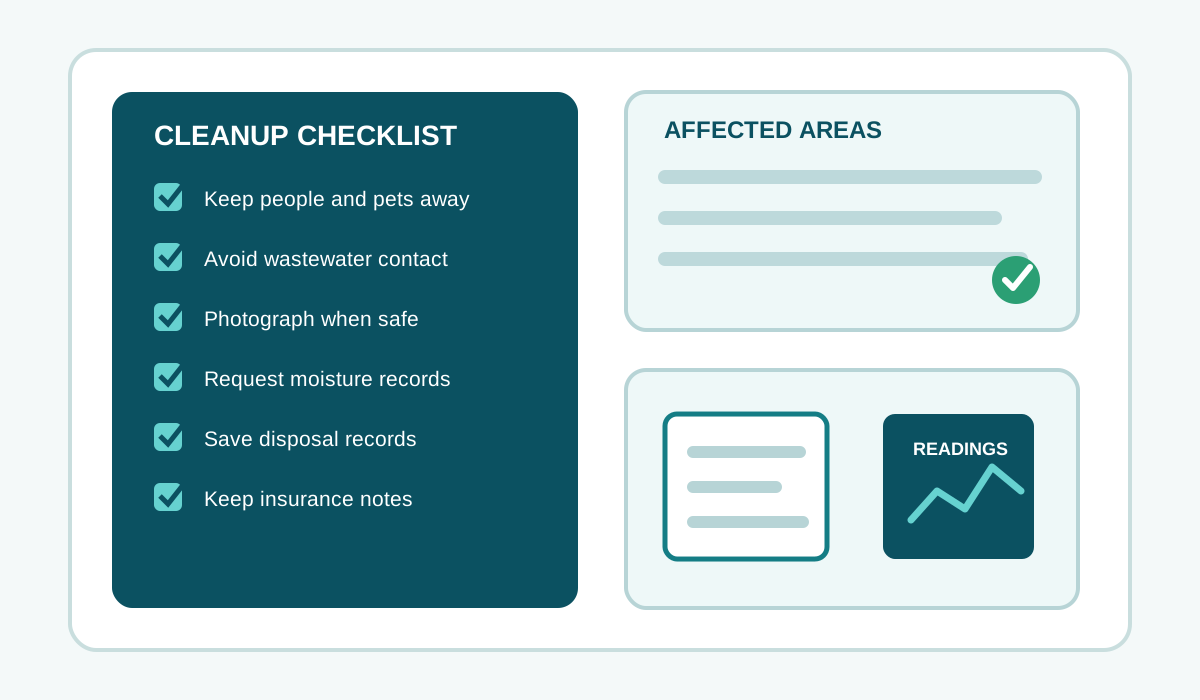
Sewage backup cleanup is different from ordinary water cleanup. If wastewater touched flooring, carpet, drywall, insulation, contents, appliances, or a finished basement, a qualified local company should inspect the area and provide a written scope before cleanup and drying continue. For local options, see water mitigation near me.
Helpful References
These references are used for general education about sewage backup cleanup, contaminated water, drying, moisture control, safety, and claim preparation. They are not contractor recommendations, medical advice, legal advice, insurance advice, or guarantees of coverage.
Safe cleanup practices for mold and damp building materials.
Homeowner guidance on drying wet materials quickly and controlling moisture.
Safety first guidance for cleanup after disasters and avoiding unsafe conditions.
Industry training related to water damage cleanup, drying, and remediation.
Training in effective and timely drying of water damaged structures and contents.
Documenting damaged property, taking photos and videos, and contacting the insurer.
FAQs about Sewage Backup Cleanup
- Stay out of the affected area, keep children and pets away, and avoid contact with the water or wet materials. Stop water use in the home if a drain or toilet is backing up. If it is safe, photograph the damage from a distance before cleanup starts, then contact a qualified local company that handles category 3 water and notify your insurer when damage looks significant.
- Sewage backup is typically treated as contaminated category 3 water because it may contain bacteria, viruses, and waste. Avoid direct contact, keep health-sensitive people away, and do not run household fans that can spread contamination through the home. This page does not provide medical advice. If you have a health concern, contact a qualified medical professional.
- Sewage cleanup is different from cleaning up a small clean water spill. Contamination can soak into porous materials and spread into hidden areas, and proper handling usually requires PPE, containment, controlled removal of affected materials, antimicrobial cleaning where appropriate, and structural drying. For sewage, sewer backup, toilet overflow with waste, or any contaminated water situation, a qualified local professional is the safer choice.
- Category 3 water is a term used in the water damage industry for water that is grossly contaminated and may contain harmful agents. Sewage, sewer backups, toilet overflows with waste, and many outdoor floodwater situations are usually treated as category 3. Category 3 cleanup typically includes PPE, containment, extraction, removal of porous materials, and antimicrobial cleaning where appropriate.
- Call when there is visible sewage, sewer odor, wastewater on carpet or drywall, a basement sewer backup, a toilet overflow that reached flooring or other rooms, sewage near appliances or electrical components, or any backup that affected a finished basement or living area. Also call when health-sensitive people are in the home or when the source of the water is unknown.
- Keep people and pets out, stop household water use, and do not enter if electrical, structural, gas, or contamination hazards may exist. A basement floor drain, main sewer line, municipal system, septic system, or sewage ejector pump may be involved. Document the water level from a safe location and ask qualified plumbing and cleanup professionals to evaluate the source and materials.
- Do not use household fans in or near sewage-contaminated areas because airflow can spread contamination. Water removal also does not prove the structure is dry. Qualified professionals may use controlled equipment after safety, containment, contamination, and electrical conditions are evaluated.
- Do not operate, test, restart, unplug, move, or touch equipment that contacted wastewater or is near contaminated standing water. Air handlers, ductwork, furnaces, boilers, water heaters, washers, dryers, refrigerators, and sewage ejector pumps may need qualified HVAC, appliance, electrical, plumbing, or utility evaluation before use.
- Porous materials that contacted sewage typically have to be removed and disposed of. That often includes carpet, carpet pad, wet drywall, wet insulation, baseboards, and many soft contents. Hard, non-porous items may be cleaned with appropriate methods. A qualified company should provide a written list of what is removed and what is cleaned.
- Timelines vary by affected area, water depth, materials, and how quickly cleanup begins. Extraction and removal of contaminated materials can take one or more days, and drying often runs several days under monitoring. Hidden moisture, multiple rooms, or extensive demolition can extend the timeline. Daily moisture readings should confirm progress.
- Many homeowners policies treat sewer or drain backup differently from other water losses, and some policies require a separate sewer backup endorsement. Coverage depends on your policy language, the cause of loss, endorsements, exclusions, deductible, and insurer review. Coverage is not guaranteed and this page is not insurance or legal advice.
- EPA and CDC guidance highlight drying wet materials quickly and controlling moisture. After contaminated water is removed and porous materials are addressed, that usually means running air movers and dehumidifiers, checking moisture behind walls and under flooring, and removing materials that cannot be dried within a reasonable window. Follow qualified professional guidance and avoid unsafe exposure.
- Save wide and close photos, safe video, the visible water level, source notes, date and time, affected rooms and contents, plumber or sewer reports, written cleanup and mitigation scopes, containment notes, equipment lists, moisture readings, drying logs, removal photos, disposal records, estimates, invoices, receipts, the claim number, and insurer or adjuster communication notes. Documentation may support review but does not guarantee coverage.
- No. Water Mitigation Hub is an independent online resource for US homeowners. We do not perform sewage backup cleanup, dispatch crews, sell service, or guarantee contractors in any city or state.
Return to the Water Mitigation Hub homepage, review how we help, or browse the full sitemap. See our advertising disclosure and disclaimer for the limits of this guide.